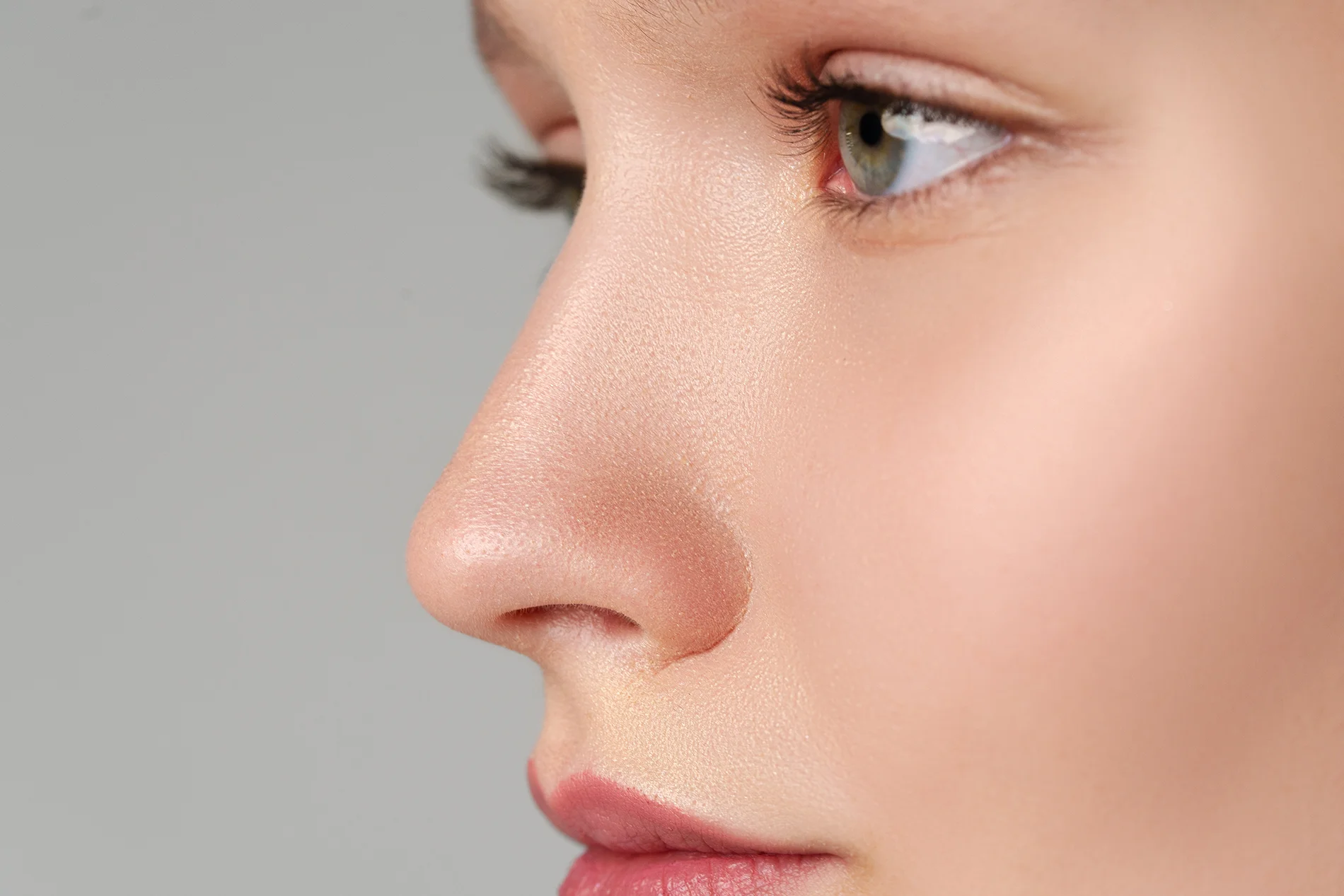
When patients come in with both breathing concerns and visible nasal asymmetry, the goal is not just cosmetic improvement – it is better function, better balance, and better quality of life. For this 28-year-old patient, septorhinoplasty addressed both. At 4 months after surgery, she felt her nose was straighter, more symmetrical, and that her breathing had improved significantly.
At Conderman Facial Plastic Surgery in Orinda, CA, we tailor each rhinoplasty plan to the patient’s anatomy, functional needs, and aesthetic goals.
The Patient’s Concerns
This patient presented with:
- Nasal obstruction, affecting her breathing
- Nasal asymmetry, with visible imbalance in the shape of the nose
- Mid-vault collapse, more pronounced on the left side
- Rightward caudal septal deviation, contributing to asymmetry of the infra-tip lobule
These structural issues affected both the appearance of the nose and the internal airflow.
The Surgical Approach
For patients with asymmetry and obstruction, careful structural support is essential. In this case, treatment focused on improving both form and function through septorhinoplasty.
Key surgical details included:
- Support of the left upper lateral cartilage
- The left side showed more collapse than the right in the mid-vault.
- A caudal spreader graft was used and sutured under tension to support the upper lateral cartilage.
- Correction of caudal septal deviation
- The patient had a rightward caudal septal deviation, which contributed to asymmetry at the infra-tip lobule.
- Repositioning and improving the septal alignment helped create better symmetry.
- Refinement of the dorsal aesthetic lines
- By improving the position of the mid-vault and caudal septum, the dorsal lines became smoother and more balanced.
Results at 4 Months
At 4 months after surgery, this patient reported being very happy with her results. She felt that her nose looked:
- Straighter
- More symmetrical
- More balanced from multiple angles
She also noted meaningful improvement in:
- Breathing
- Comfort
- Overall quality of life
Top-down views were especially helpful in showing improved infra-tip symmetry and smoother dorsal aesthetic lines.
Why Structural Support Matters in Rhinoplasty
Rhinoplasty is not only about reducing or reshaping visible features. In many cases, especially when patients have asymmetry or obstruction, internal support techniques are what create long-lasting success.
Structural techniques such as spreader grafting can help:
- Maintain or improve airflow
- Stabilize weakened areas of the nose
- Improve symmetry in a controlled, lasting way
- Support natural-looking results rather than over-resection
This is especially important when one side of the nose has more collapse than the other.
Recovery Timeline
Healing after septorhinoplasty is gradual, and each stage reveals more definition.
General recovery milestones:
- Week 1: Swelling, congestion, and bruising are common
- Weeks 2-4: Early shape changes become more visible as swelling starts to decrease
- Around 4 months: Patients often notice meaningful improvement in both appearance and breathing
- Up to 1 year: Subtle swelling continues to resolve, especially in the tip
At the 4-month mark, patients often look significantly improved, while still continuing to refine.
Who May Be a Candidate
You may be a candidate for septorhinoplasty if you have:
- Trouble breathing through your nose
- A crooked or asymmetric nose
- Collapse or weakness in the mid-vault
- Tip asymmetry related to septal deviation
- Interest in improving both nasal function and appearance at the same time
A consultation and examination can help determine the right surgical plan.
Why Choose Conderman Facial Plastic Surgery in Orinda, CA
At Conderman Facial Plastic Surgery, treatment plans are built around both the artistry and function of facial surgery. For rhinoplasty patients, that means looking beyond surface appearance and addressing the structural issues that influence breathing, symmetry, and long-term stability.
Patients seeking care in Orinda, CA and the surrounding Bay Area often want results that look natural, feel functional, and fit their features. That is exactly the focus of a personalized septorhinoplasty approach.
The Bottom Line
Septorhinoplasty can be a powerful option for patients with both nasal obstruction and asymmetry. By correcting structural collapse, supporting the mid-vault, and improving septal alignment, it is possible to create a nose that looks straighter, functions better, and feels more balanced overall.
For this 28-year-old patient, that meant not only a more symmetrical nose, but better breathing and an improved quality of life.